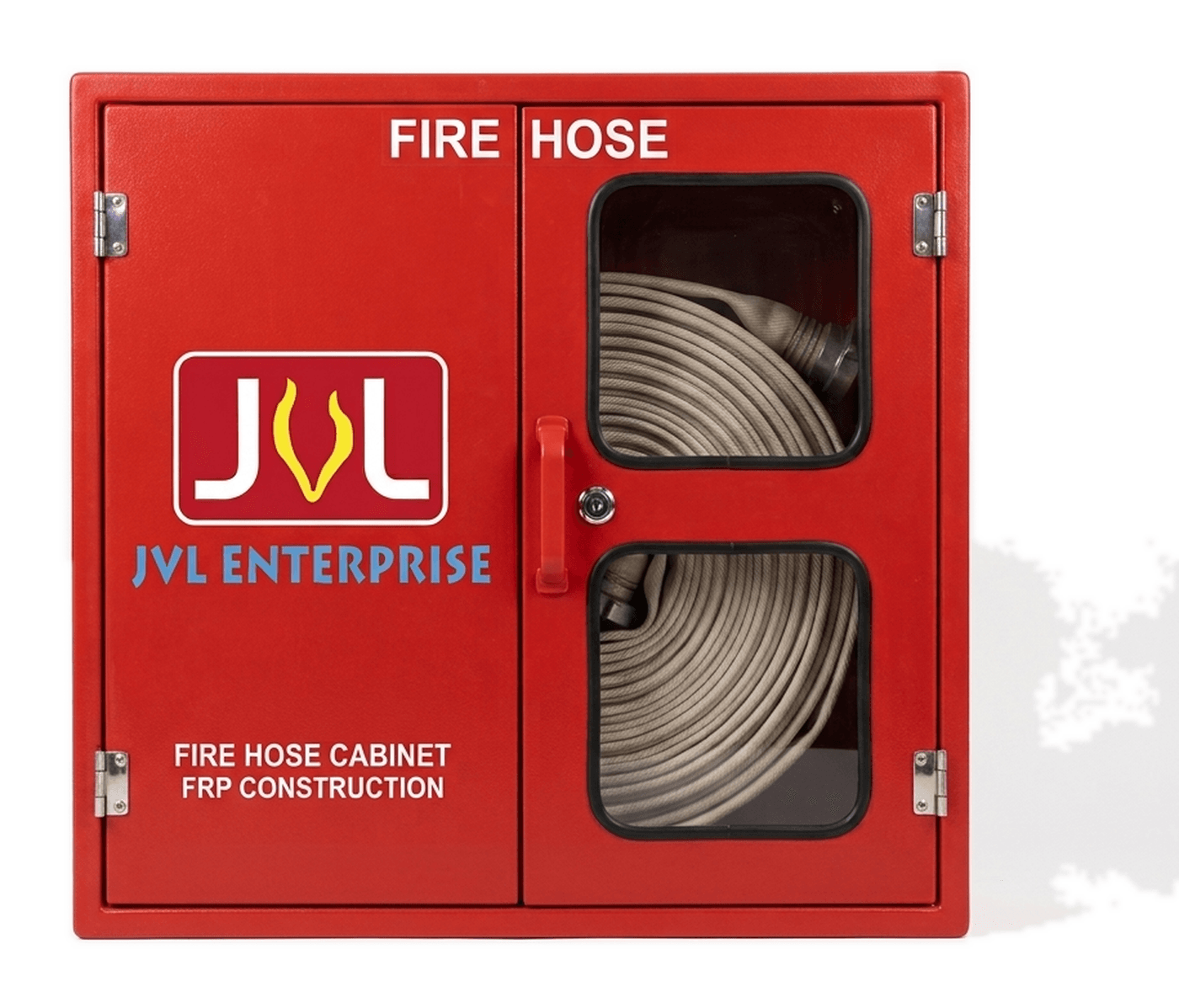
We have a small dataset that procurement officers ask for repeatedly: how FRP cabinets perform against mild-steel cabinets in coastal Indian conditions. The short version is that the total cost of ownership swings hard towards FRP after year two.
The day-one comparison
Mild-steel cabinets are cheaper at the gate. They are also heavier to install, prone to galvanic corrosion under salt-spray, and dependent on annual repainting.
The five-year field data
Over a five-year window across three sites in Dahej, Hazira, and Mundra, MS cabinets needed a full repaint cycle in year two and partial replacement in year four.
FRP cabinets cost more on day one. They install faster — a 750 mm FRP hose box can be lifted into place by one person — and require no painting cycle. UV-stable gel-coat holds colour through five Indian monsoons.
What about steel structural integrity?
A common objection: "steel is stronger." For static enclosures hosting fire hoses, that strength is unused. FRP composite is robust enough for the load profile a hose box sees (hose + branch pipe, deployed under emergency conditions). The failure modes that actually retire fire hardware in the field are corrosion and finish degradation — both of which FRP wins.
What we recommend
For coastal Indian sites — refineries, chemical plants, ports, jetties — specify FRP. For inland industrial sites with low UV and low humidity, MS remains acceptable but requires the maintenance budget.